
What I have learnt from Egypt is that there is nothing “final” about “final”.
In a haggling situation, I would be asked: “What’s your final price?” to which I might answer, in my rather literal Scandinavian way, the highest price that I would be willing to pay for whatever the souvenir was that had caught my eye. To the Egyptian salesman, my answer simply means: “Here is the price that you can continue to shake your head at in disbelief, while implying that I am insulting you and pushing your family over the edge into poverty and starvation by suggesting such a ridiculous number.”
When the salesman would then respond with his “final price”, it would barely be different to his starting point in the haggling, and I would wonder why, oh why, there could not just be a price list somewhere, with lovely fixed numbers, so I could spend more time enjoying the sunshine instead of sweating over this absurd exchange of theatrics? Apparently, locals are expected to haggle even over fruit and vegetables at the market in Egypt. I wonder how contracts for public works are dealt with, in terms of actually settling on a “final” price?
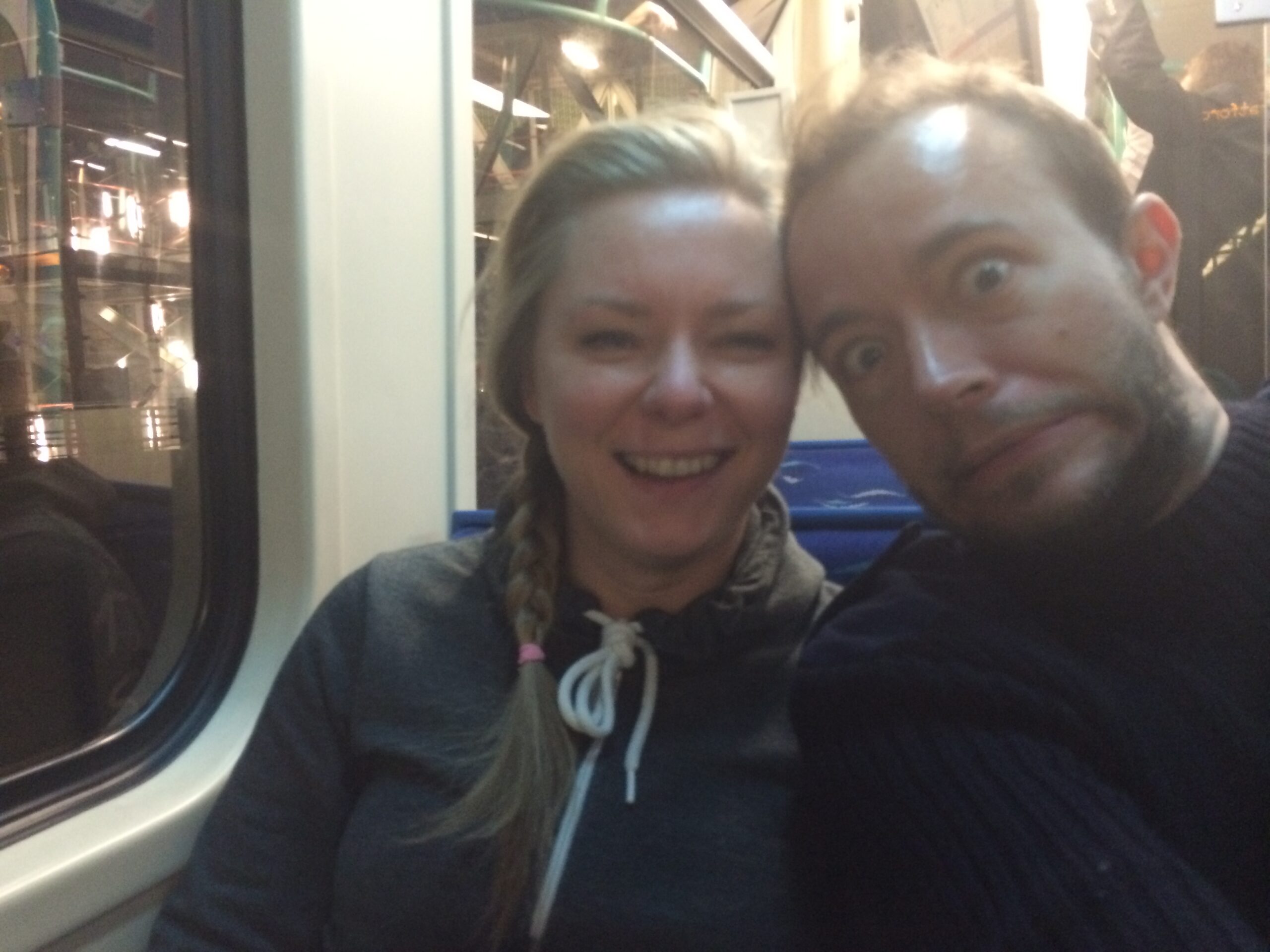
I am glad to say I had a travelling companion with me that I could put on a “Good Cop, Bad Cop” act with, so that I was considered a bit like the nice guy who didn’t have a clue, except that he liked nice things, and then the expert haggler would get down and dirty with the salesman. It is probably a good idea to steer clear of Egypt, in fact, if one does not have haggling skills, or at least a companion who is suitably qualified.
Later, on encountering majestic sites such as The Valley of the Kings or Karnak palace in Luxor, I realised that there is no such thing as historical finality either. The Ancient Egyptians conceptualised and built awe-inspiring monuments in their millennia of peak civilisation in the BC era. The ones that are still standing have been recycled by other civilisations who came later on.
For example, when the Romans were intent on eradicating Christianity in Egypt, early Coptic Christians took refuge inside the tombs of pharaohs in the Valley of the Kings, and drew crucifix graffiti over the ancient hieroglyphics on the walls. They also scratched out the faces of the old Egyptian gods, so they could use the narrow passages and rooms of the tombs as makeshift Christian churches. The English came along a millennium and a half later and added their own names as graffiti to the walls, while they excavated deeper and deeper into the tombs. Then Italians came in this most recent decade, with their special skills in fresco restoration, and recreated some of the damaged hieroglyphics and stone carvings. Layer upon layer of civilisation, crashing into each other, mish-mashing their legacies, destructive or restorative, like a fantastical layer cake.
At Karnak, palace gold and columns was taken by the Greeks to Alexandria when they built new temples there for their own gods. The Arabs who passed through Egypt were so frightened of the massive stone statues of Egyptian gods and pharaohs potentially coming back to life that they cut off the statues’ noses. This was so the statues could not breathe in any air to reanimate themselves and attack the Arabs. That is why statues with intact noses are as rare as chicken’s teeth in Egypt.
The tall and graceful Ancient Egyptian obelisks that were erected in honour of great pharaohs (by the pharaohs themselves incidentally, as this was probably before vanity was invented as a concept) were gifted away to other civilisations, and now stand in places such as New York, London and Paris, with the misnomer “Cleopatra’s Needle” despite being erected more than a millennium before her lifetime. Cleopatra did start the obelisk export trend by giving one away to Julius Caesar though.
Speaking of wily women, another wonderful “finality” that the Ancient Egyptians also managed to completely disregard was that of the woman who wanted to be a pharaoh after her father, so she simply declared that she was half-man half-god, stuck on a fake beard, painted herself dark, donned a man’s outfit, and that was that. Meet Pharaoh Hatshepsut. S/he was a good and generous pharaoh, so everyone decided to disregard the fact that they knew she was not a man. Or a god, perhaps.
As I now watch the Egyptian democratic process take place on TV, I wonder how long the “finality” of the elections will last this time. Tumultuous times in a country where there is so much history in the bedrock (literally – there are hundreds of tombs underground around the Pyramids that have not been excavated because there is no more space in Cairo museum to house the artefacts that would be found) that it may be difficult for Egypt to find its place in these more modern times.
On a “final” note, I showed a couple of papyrus painters in Luxor a photo of Viking Runes on my camera, and they asked me how old those stone carvings were. When I answered their question with some pride and said “Oh, around 1000 years”, they laughed and called the millennium-old carvings “modern”. Based on such a timescale, I suppose it is easier to see how nothing is ever very final at all. All is change, and nothing is final.
Thank you for the reminder, Egypt.


