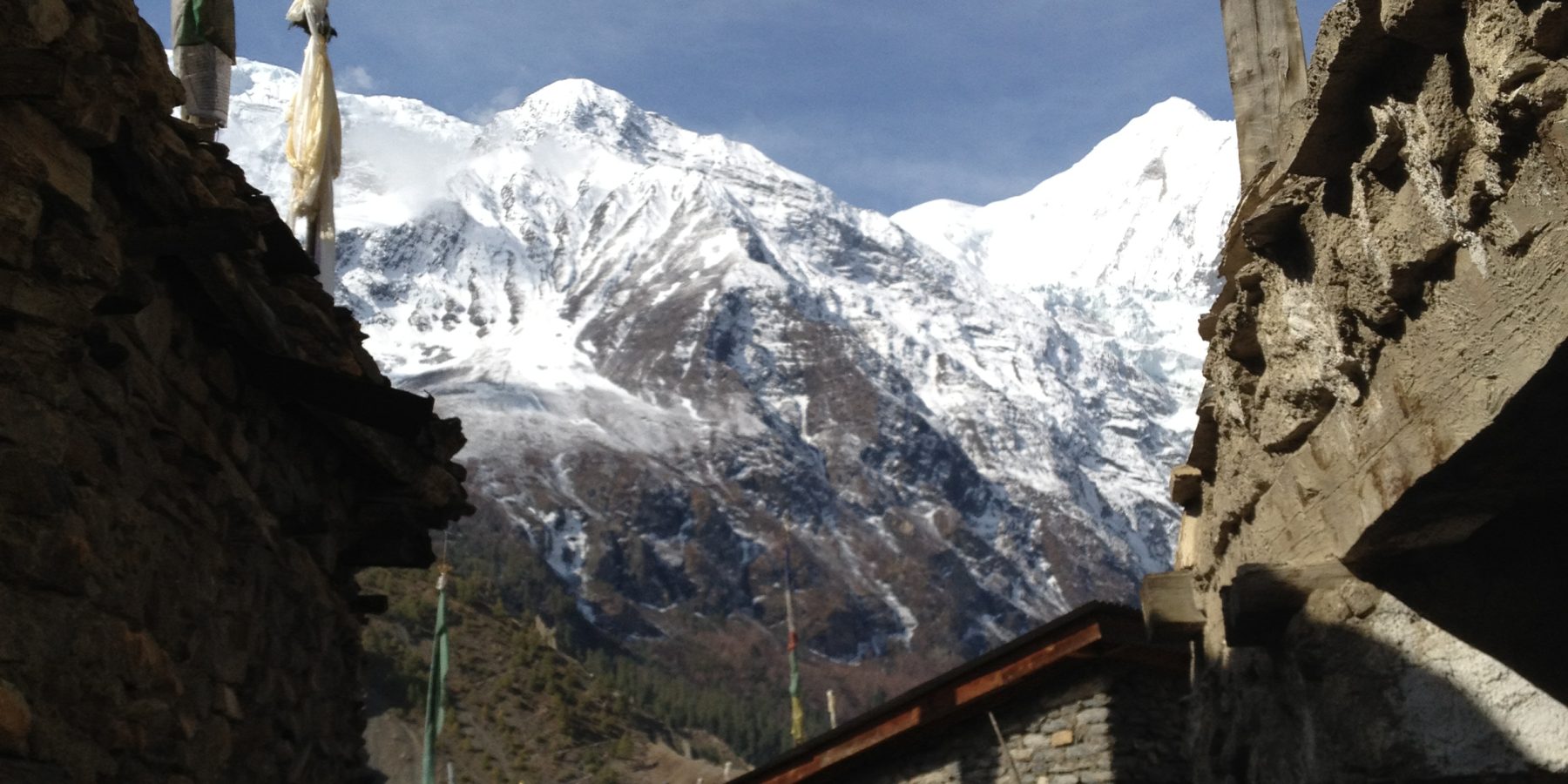
Relaxing at 4075m at Tilicho Peak Hotel in Sheree Kharka after the steady climb from Manang via Khangsar, I am in awe of the mountains. I can barely take my eyes off their snow-covered peaks. Today I became convinced that there are indeed Mountain Gods, and I humbly asked them not to crush me with rock or freeze me in snow as I step into their high domain.
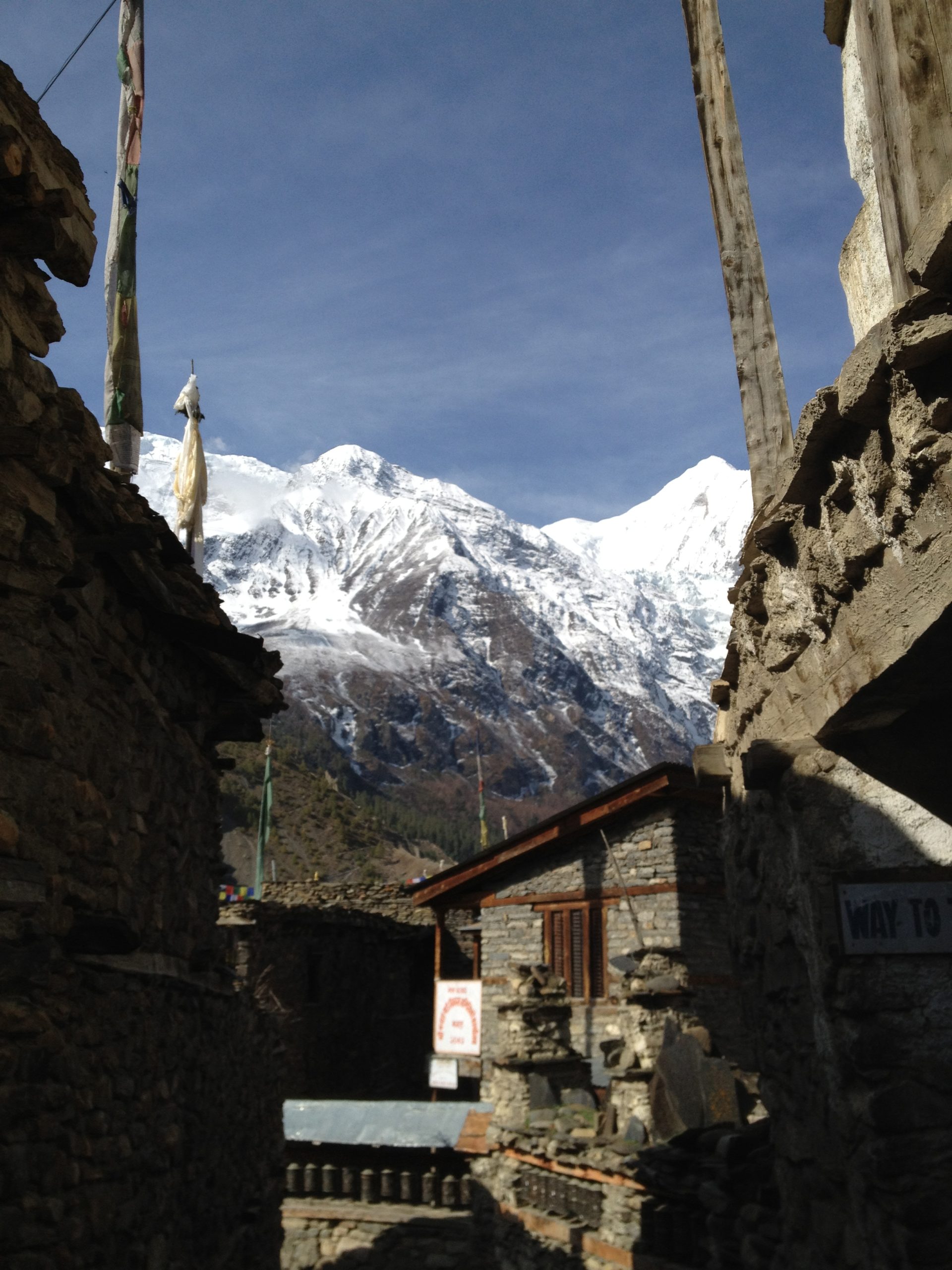
We are now in the crossover zone where trees end and snow begins, and everything that grows here seems to be a shade of brown. Green-brown, orange-brown, red-brown, grey-brown. In the shade, big lumps of snow from last night’s deluge are being hunted down by Syange to throw at pretty much anything.
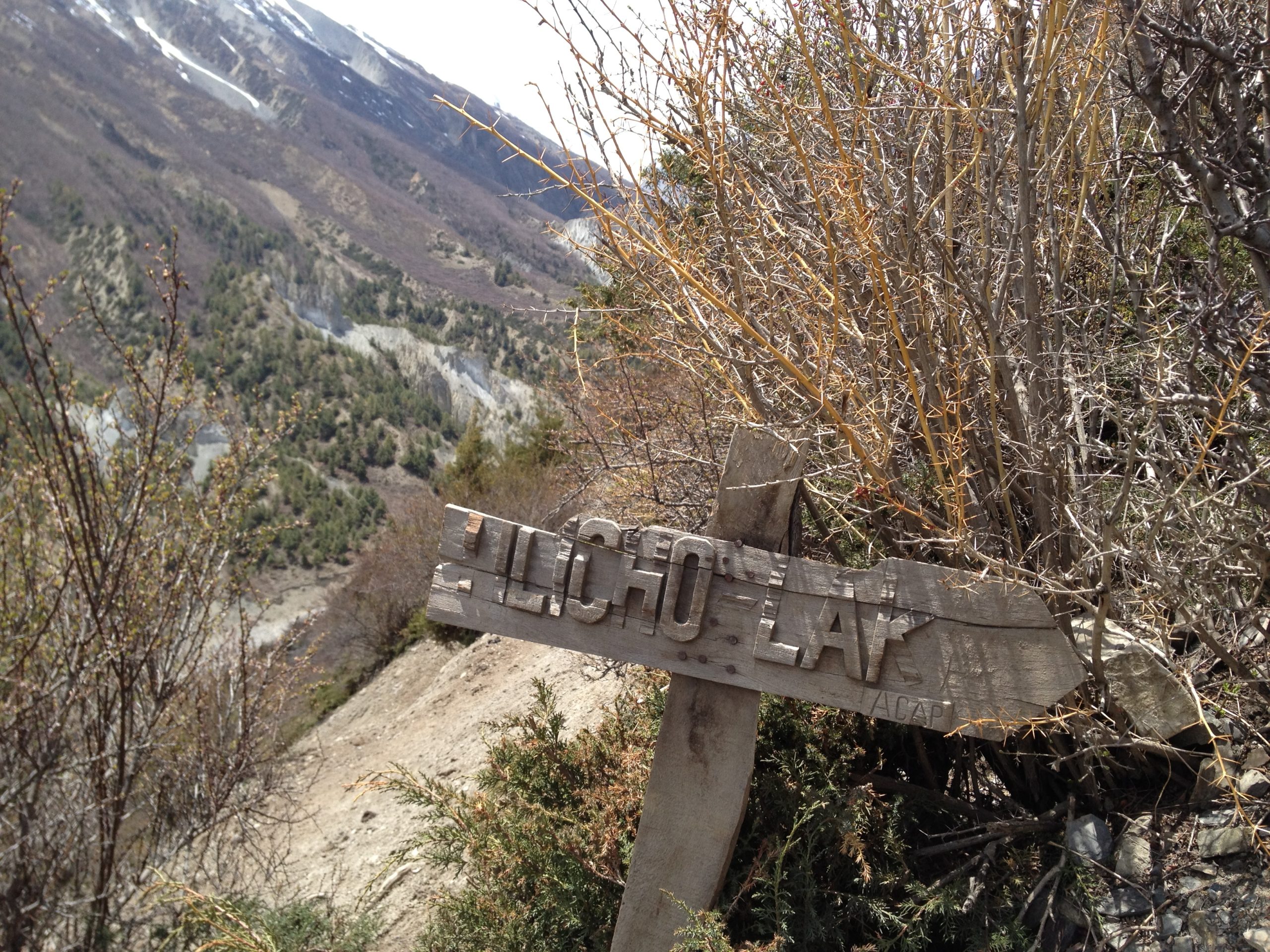
It is totally quiet in between the bursts of afternoon wind, the rumbling avalanches on the heights opposite and the buzzing of the odd lazy fly cruising at a speed that doesn’t tax its physiology. Tilicho Peak is easily visible, and we are just one ridge away from catching sight of the Lake. That’s for tomorrow. It is tangibly close.
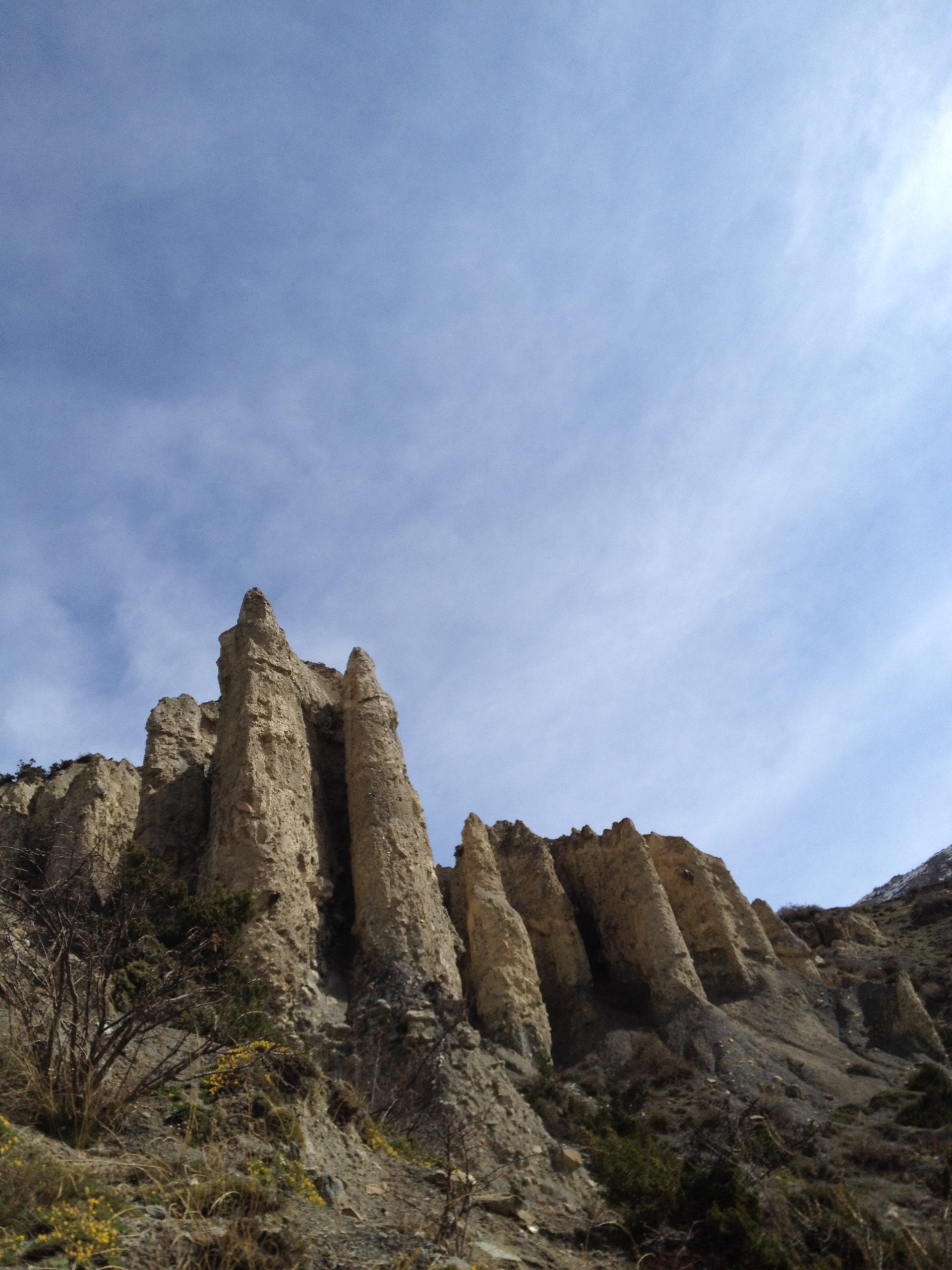
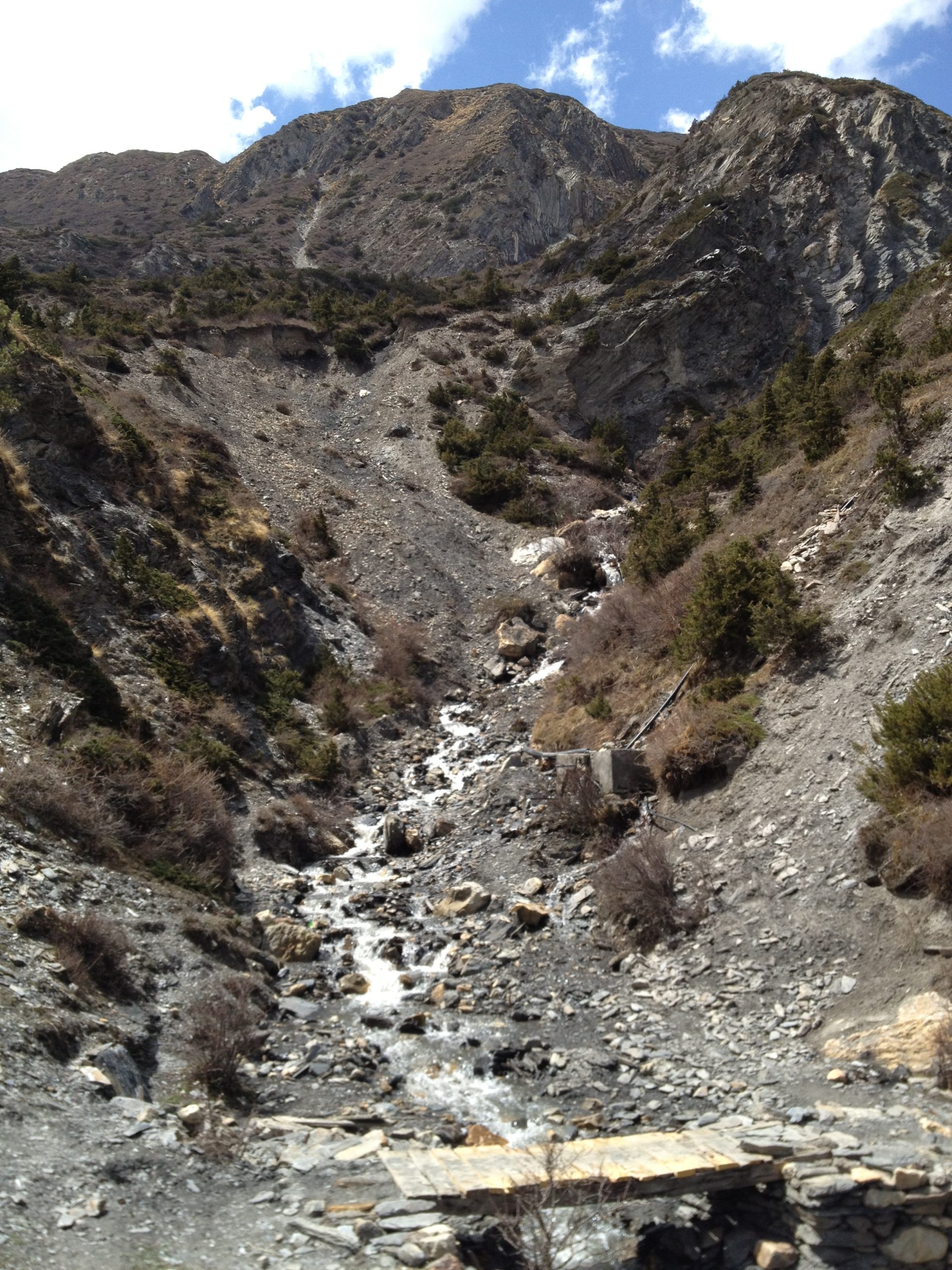
Walking up to this majestic place today, the landscape and views changed so quickly that it was like moving at high speed through other geographies: a touch of Spanish Pyrenean foothills, some Scandinavian pine forest, a dash of Austrian mountain rivers and tall sprinklings of Grand Canyon sandy columns. My body has managed to get much stronger and enduring over this last week, and it is much easier to take in and enjoy the scenery from that solid physical foundation.
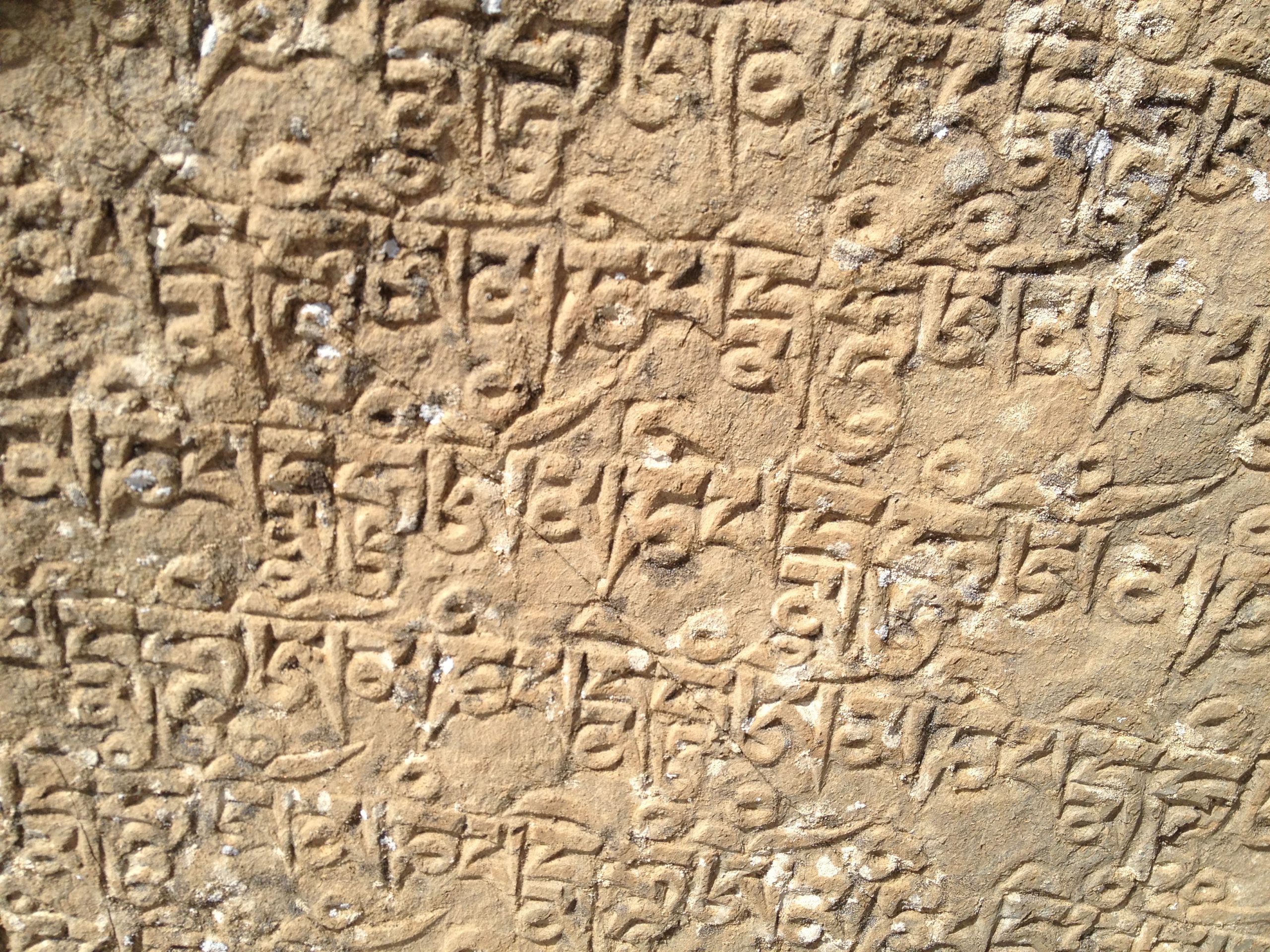
Dorchi’s plan for tomorrow is now for us to stay at High Camp, very close to Tilicho Lake, just stopping by Base Camp to have lunch. A quick primer on mountaineering: those who wish to climb a mountain will spend a while acclimatising at a designated Base Camp at a suitable height, where supplies are brought up to. Then the climbers will make their way to High Camp, the next step in acclimatisation up the mountain, and depending on how high the mountain is, there may be four or five high camps up the mountain at increasing heights. So we will effectively be skipping Tilicho Base Camp, as it’s only 100m higher than where we are staying tonight, and going straight to High Camp, which is a slightly worrying 850m higher than here. The previous 800m+ ascents have not agreed with my body at all.
There isn’t really any way around it, so I will take painkillers preventatively and if I still get a headache and other symptoms after that, we will need to descend somewhat before bedding down for the night. I have met two guys coming down the mountain with mild to moderate altitude sickness, and apparently one in four people get it around here. Being over 50 years of age is apparently a protective factor, meaning people of that age get it less, and the Manang doctors said that was because people of that age group don’t try to push themselves too much and just take time to relax and enjoy the scenery. Finally an illness that one gets less of as one gets older!
Having chatted to another guide this evening, a Nepali who just took three Chinese trekkers to and from Tilicho Lake in one day, I am now feeling concerned again that the Pass above the lake will be too hard for me. When a guide describes a pass as difficult and hard, that does not bode well for my ability to negotiate it after a rapid altitude ascent. I am not sure what to do. Dorchi seems to have faith that I will be alright, both tomorrow at High Camp and at the Pass, but I am not so sure. I worry that he is trying to downplay the risk and difficulty for whatever reason. I don’t want to be gung-ho about risking my life up there – although I am not so worried about dying, and it would be a beautiful place to leave this mortal vessel.
As dramatic as it sounds, we will see if I live to tell the tale of Tilicho Tal and Meso Kanto La.