
It is pitch black, and the cold stone walls are closing in all around me. I use my hands to feel my way forward, to both sides and above my head, as I inch forward, stooped over. The rock faces are mostly blunt but their surface is anything but regular. Large protuberances followed by sizeable dents make it almost impossible to keep my bearings. Am I still going forward? Did I take a wrong turn?
Keeping terror at bay is an increasingly intense task, and I resort to playing mental tricks on myself to remain calm. “It’s just a game, and I am trying to guess the way with my hands… What’s the name of that sense? Oh yes, stereognosis – I am good at that, recognising objects by touch alone. It’s just dark because I have chosen to close my eyes. All is well.”
Suddenly I hear someone behind me call out: “There is light ahead!” I do not see any light, and wonder if I did take a wrong turn and need to back up again… but then I remember that my eyes are actually closed, so perhaps opening them again would help! And sure enough, there is a vague glow of light on the outlines of the rock face ahead to the left and a tiny sheen of yellow on the sandy floor.
Phew – I have almost made it through this experience of the Incan underworld…
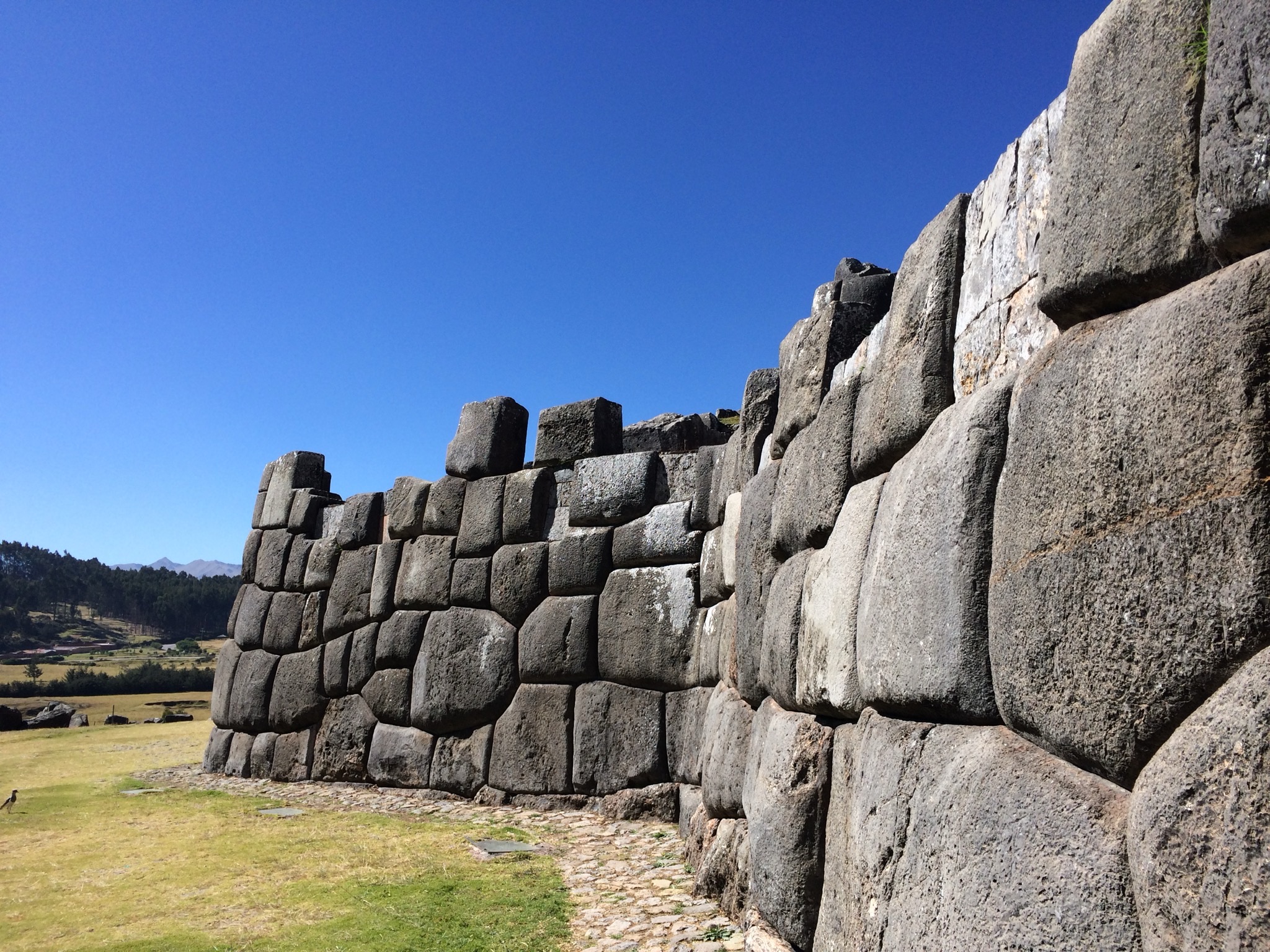
I emerge from the chincana, a tunnel that leads from one part of the sacred Saqsaywaman site above Cuzco to another. This one was only short – perhaps 10 metres – but there are others that lead all the way down to the centre of Cuzco town, and perhaps elsewhere too. The Incans used these chincanas as secret shortcuts, and when the Spaniards arrived, they could not understand how the Incans could appear and disappear at will from the centre of Cuzco. I try to imagine feeling my way forward through a kilometre or more of rocky darkness, and a shiver runs down my spine…
Archaeologists found remnants of bamboo plants that had been planted in the long chincanas, which would have provided a bit of oxygen to any tunnel walkers passing through. However, the Incans destroyed other aspects of their tunnel engineering to ensure the Spaniards did not learn their secrets. Again, mystery prevails in and around this aspect of Inca culture. The Peruvian government blocked the entrances to the long chincanas with huge stones after two students trespassed and died from lack of oxygen down there.
Beyond underground transport, another important function of the chincanas was connection with the underworld.
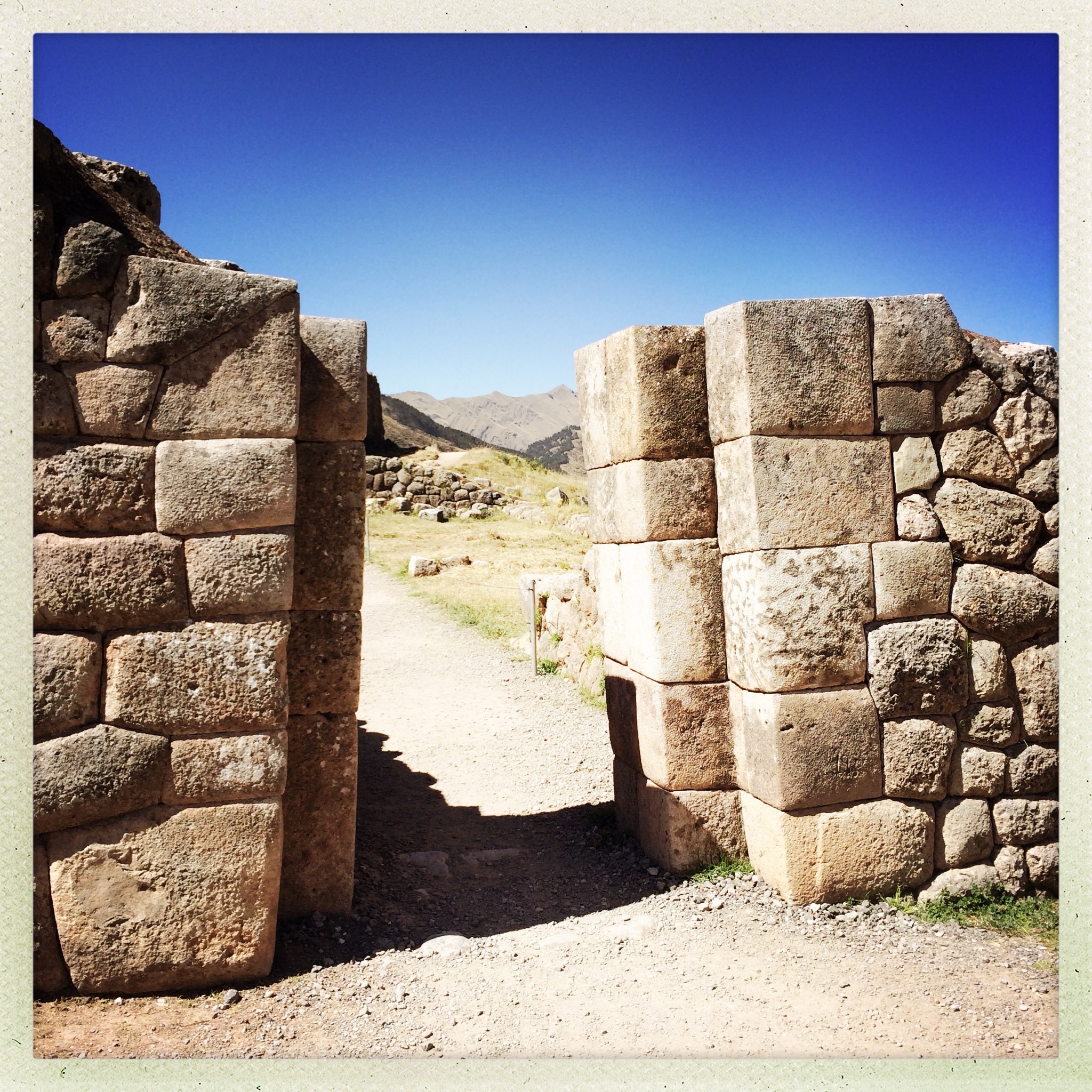
I discover this at the site of Pukapukara, situated on a hill outside Cuzco town. This combined fortress and sacred site was used as a checkpoint for those wishing to enter and exit the “navel of the world” – the Quechua meaning of Cuzco’s name. The garrison buildings are lower on the hill, and at the top is an ushnu: a circular site where religious rites were carried out. These can be found throughout the Incan empire’s territory on hill and mountain tops. Closer to the sky, closer to the gods and the Sun god himself.
A chinchana tunnel to the underworld at Pukapukara is located below the central circular area for religious rites. Its dark mouth opens into the rock, and I cannot see more than one single step inside. A guide explains that the priests would come to this chincana, often in the night, to enter it with reverence and leave sacrifices inside for the gods. Coca leaves, llama bones, cocoa beans. The Incans believed in duality, but did not associate darkness or the underworld with evil: it was simply the opposite, contrasting side of reality. Thus, priests could acknowledge the underworld in the chincana before ascending to the ushnu and carrying out rites for the gods there also.
The Incans believed in cycles of lives – reincarnation, in other words – and passage through the underworld was essential to move through those cycles.
These cycles of lives would be decided by the gods. The nobility in Incan society would always reincarnate in their own stratum of society, while the common people would always reincarnate as workers again. There was an impenetrable barrier between them, like the wall that would be constructed in all towns to demarcate noble and common people territory.
Both noble and common people would incarnate into the Earth plane, represented by a puma. After death, their soul would go through the underworld, the domain of the snake, which was a sacred animal that also represented knowledge. Due to the Incans’ nature worship, they hoped to have a good chance of quick and easy passage through the underworld. They saw this passage from the earth plane to the underworld like that of water: when spilled on the earth, it absorbs quickly down through the soil, and becomes filtered and purified on that journey.
To complete the cycle, their soul would rise up to the heavens again, represented by the condor, which soars high in the skies of The Andes. This journey could take much longer, as the Incans perceived the skies as very far away, and a long distance to rise through. Deceased Incans were often buried with large food supplies so their soul would have enough to sustain them on that upward journey. The gods would then decide the remit of an Incan’s next lifetime on the Earth plane.
The Incans relationship with death was interesting: the emperor and noble people would be mummified at death, and those mummies would be brought round in processions, as well as into battle, to remind the Incas of their power, knowledge and history – a visual and tangible link to their past. Common people would bury their dead in their houses, preserving them like a book of family history.
I am fascinated with this Incan inclusiveness of that which other cultures may hold in separation: darkness, underworld, death…
This reminds me of the shadow work that Jung wrote of in psychology: it is not through ignoring or running away from the darkness in ourselves that we grow, but by facing it and acknowledging what it holds for us. Then we can own our higher selves all the more, completely and fearlessly, too.
Although the Incans believed in duality, they also had space for the unity from which that duality stemmed. In their pantheon of gods, the Sun, the Moon and the Earth ranked highly. And yet, above them, was an invisible god whose likeness they never carved: Apu Kon Ticki Wiraqocha – The Creator of the Universe. This god gave rise to all the rest of the gods, from the Sun, the Rainbow, all the elements, many different animal gods, all the way down to the Frog god, who was associated with rain.
At the sacred site of Q’enqo, which means “labyrinth” in Quechua, I am confronted with the sight and energy of a sacrificial altar inside an ingeniously carved stone cave. A special shelf would hold a polished plate of metal to reflect moonlight directly onto the altar, as the shamanic work of the priests was usually done at night. A U-shaped canal was carved around the base of the altar so that the blood could run there. On the opposite side of the cave, closer to the entrance, a deep and wide shelf was chipped into the stone. This was where the bodies of the sacrificed would be dried and mummified, as air could circulate more freely there, which aided the preservation of the skin and features.
It is at the same time hard to believe and yet so easy to picture the Incan priests standing at the sacrificial altar with their specially shaped half-moon blades with Tumi the god on the handle, carrying out these rites intended to assuage the gods.
Before the 1400s, thousands of children would be sacrificed by Incas if the augurs for the year were not good, for example if water ran underground instead of forward on the earth when it was poured at ceremonial sites, or if the El Niño phenomenon was observed in the Gulf of Mexico. Children were taken from every Incan province, and used as sacrificed because they were deemed pure, which the gods would appreciate.
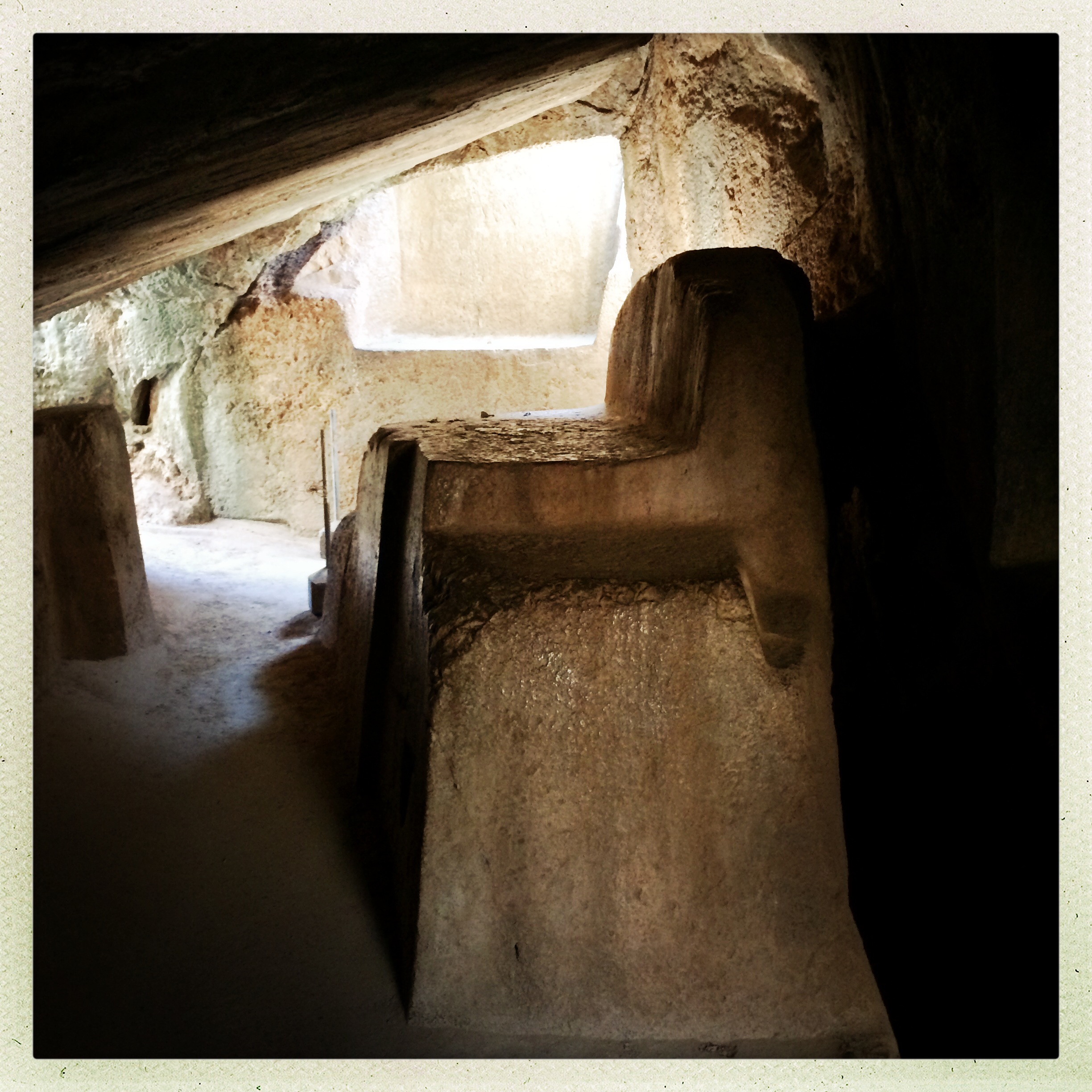
When the emperor Pachakute came to power, he deemed this number of human sacrifices excessive, and from then on, only one or two children would be sacrificed under extreme circumstances, but otherwise llamas would be used. So it was both the blood of children and llamas that ran in the U-shaped canal around the sacrificial altar at Q’enqo. History can seem so distant and abstract, and yet also so completely alive and vivid at the same time.
Like the Incans and their relationship with the underworld, it feels important to me that these sacrificial acts are not forgotten or hidden away. Although it is painful and hard to open to its full horror, I accept that I, as a human being, also carry this history and it is not separate from me. I can as easily imagine myself as the priest whose blade took life as the human sacrifice who lay on that altar as the blade flashed in the reflected moonlight.
“It is just dark because I have chosen to close my eyes,” is what I told myself at the very beginning of this trip through chincana tunnels, Incan rites and reincarnation beliefs. If I open my eyes, I can witness all that we have been and are, and let light into darkness, and darkness into light.
As you stride through the earthly domain of the puma, may you, dear reader, have fruitful trips into the underworld with the snake of knowledge. And may you take tantalising flights with the condor to the heavens through your cycles of life.


